Hello, my name is Meichi.
I’m a product designer with 15+ years of experience turning complex problems into intuitive solutions and scalable systems.
I’ve designed for Gemini, Google AI models, Google Assistant, and Google Cloud, shaping user experiences, building frameworks, and bringing clarity to ambiguous problems from strategy to execution.
I bring a systems-level perspective to AI product design, connecting user needs, product strategy, and execution to build beautiful experiences at scale.
Work
Timeline
Google
2019 - 2025
Senior Product Designer
Momentus Studio
2015 - 2019
Senior Product Designer
Finger Food Studios
2015
Product Designer
Medeo
Brand Manager
2013 - 2015
Paramount Pictures
Brand & Communications Designer
2010 - 2013
Marketing Manager
UBC
2010 - 2011

My Work
Building a Discovery &
Orchestration System for Gemini
Designed Google Gemini’s onboarding and feature discovery to make Google’s AI more approachable and useful. By introducing educational moments and guided exploration, the project improved engagement, lowered barriers to entry, and increased active users globally.
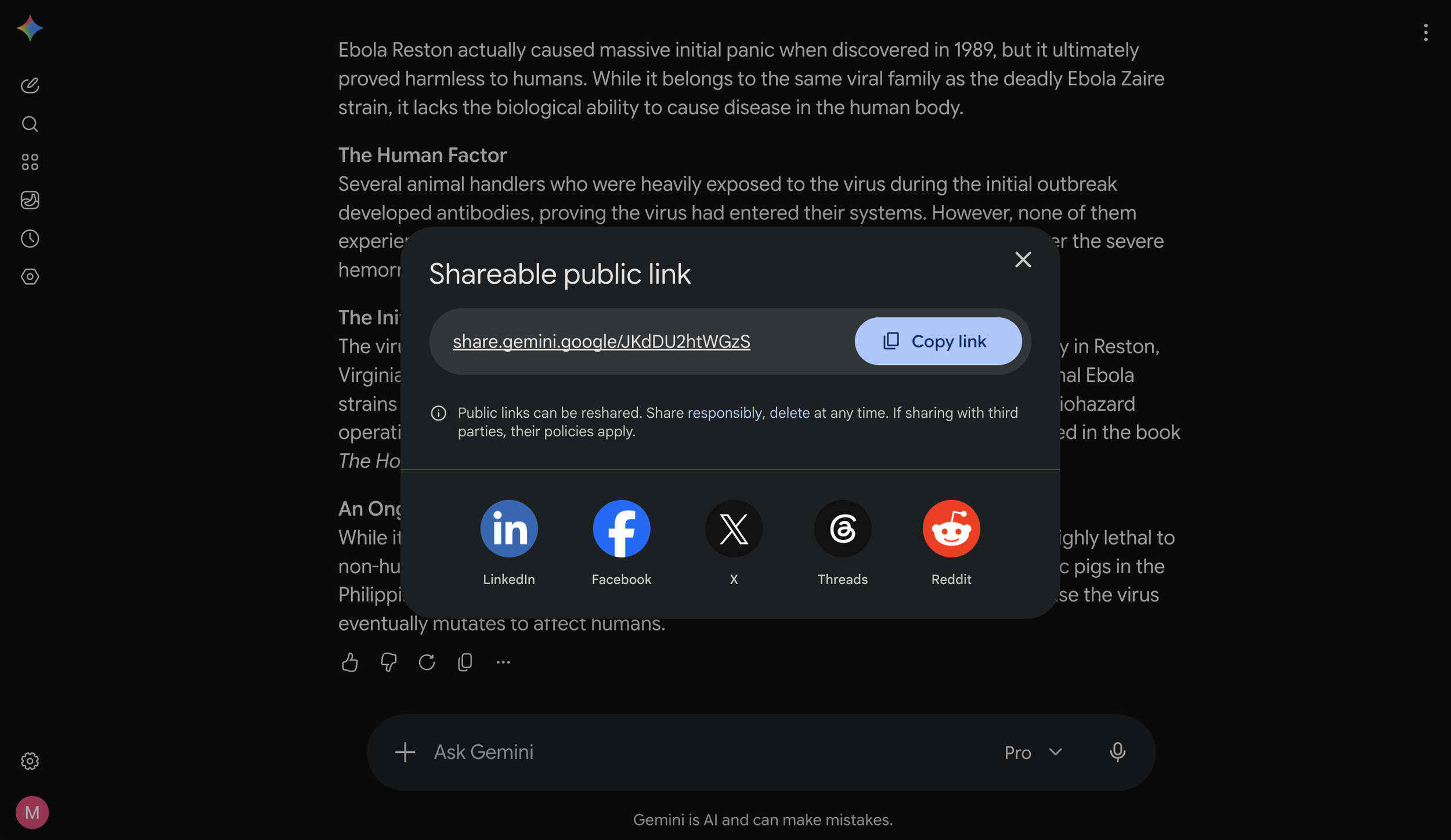
Defining Gemini’s Conversation Sharing Experience
Led the design direction for Google Gemini’s conversation sharing experience; establishing the foundational interaction model for making AI conversations shareable at scale. Designed the first iteration of Gemini sharing, copying and publishing conversations, shared-link management, etc. creating a reusable foundation that remains live on Gemini today.

Designing Google’s AI Training
Tool for Human Reviewers
Designed an internal AI training tool for Google that streamlined human reviewer workflows, making annotation and evaluation faster and more valuable. The tool improved scalability, integrated feedback loops, and ultimately enhanced the quality and safety of Google’s AI models.
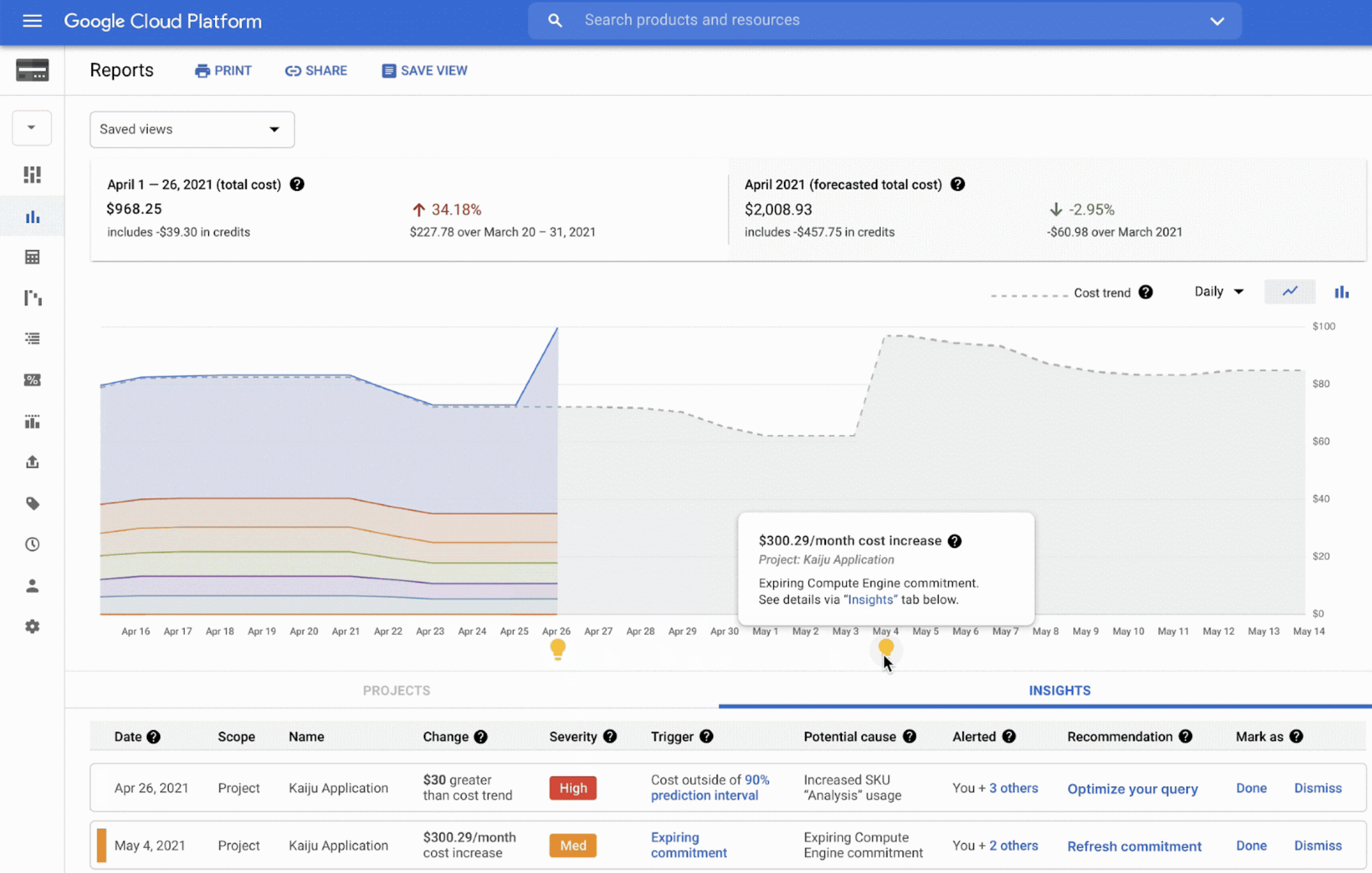
Designing Smart Monitoring for
Google Cloud Billing
Designed Google Gemini’s onboarding and feature discovery to make Google’s AI more approachable and useful. By introducing educational moments and guided exploration, the project improved engagement, lowered barriers to entry, and increased active users globally.

Designing a Smart Mirror
Fitting Room for Levi’s
Redesigned Levi’s fitting room experience with a
RFID-enabled smart mirror that offered styling recommendations, size requests, and product discovery directly in-room. The solution improved customer engagement, streamlined the try-on process, empowered store associates, and positioned Levi’s as a leader in tech-enabled retail innovation.
Building a Discovery &
Orchestration System for Gemini
Bringing coherence to feature discovery and education across a rapidly evolving AI product
Product
Google Gemini
Users
Gemini’s Global audience
My Role
Product Designer
Collaborators
Engineers, Researchers, Product Managers, UX Writers
Tools Used
Figma, Google AI Studio
My Process & Leadership
Define the core discovery and education challenges as Gemini's capabilities rapidly expanded, translating fragmented user experiences and competing product priorities into a unified design opportunity.
Identify systemic gaps across feature discovery, messaging, and user education, establishing a cohesive hierarchy that helps users understand what Gemini can do and when to use it.
Establish a long-term vision and phased strategy for Gemini's discovery and orchestration experience, balancing immediate launch needs with a scalable framework for future capabilities.
Build a centralized design system and UX playbook that standardizes messaging hierarchy, reusable interaction patterns, content principles, and launch processes across feature teams.
Orchestrate cross-functional alignment across Product, Engineering, UX, Research, Legal, and feature leads, creating shared principles and decision-making frameworks to resolve competing priorities and guide execution.
Influence product strategy and secure leadership alignment by articulating the value of a unified discovery experience, advocating for investment in scalable systems over fragmented, feature-by-feature solutions.
Project Overview
How might we make Google Gemini more discoverable, approachable, and useful to a global audience? Collaborating with AI researchers, engineers, and product managers, my focus was on improving the first-time user experience, discoverability of features within Gemini, and approachability of AI—encouraging exploration, new feature usage, and interaction with Gemini across all surfaces.
Designing Google Gemini’s Discovery and Education Process

The Challenges
Stakeholder and leadership alignment is always a challenge at Google, the expectation to deliver quality work within a rapid timeline means working with the team to strategically identify and prioritize gaps and opportunities, advocate for the best user experience, all the while balancing business, UX, and engineering constraints in our execution.
Gemini’s rapidly expanding feature set introduced its own complexity. Designing a system capable of orchestrating contributions from multiple teams with unique timelines and supporting these discovery moments in a cohesive way was key.
Designing Google Gemini’s Discovery and Education Process
Impact & Results
The work established a more cohesive approach to feature discovery and education across Gemini, helping teams contribute to a shared product experience rather than designing disconnected discovery moments.
By introducing common principles, reusable patterns, messaging hierarchy, and an eng-ready components library, the framework gave cross-functional teams a more consistent foundation for introducing new capabilities as the product evolved.
This work made Gemini's AI capabilities easier to discover and understand while giving teams a scalable way to support future launches. There was a marked improved in user engagement, perceived helpfulness of the product, decreased barriers to entry, and increased MAUs/DAUs. The end result was a more approachable AI experience scaled for a global audience.
Designing Gemini’s First
Conversation Sharing Experience
Building the foundational conversation sharing experience that exists in Gemini today
Product
Google Gemini
Users
Gemini’s Global audience
My Role
Product Designer
Collaborators
Engineers, Researchers, Product Managers, UX Writers
Tools Used
Figma
My Process & Leadership
Define the foundational sharing experience for Gemini, translating an emerging product capability into intuitive end-to-end flows that make AI conversations easier to share and access beyond the original interaction.
Establish the core interaction model and user journeys for sharing Gemini conversations, balancing ease of use, simplicity, security, and building user trust around what happens when a conversation leaves the original chat experience.
Navigate ambiguity in an emerging AI product category, identifying interaction patterns and UX considerations that would establish a strong foundation without constraining the product’s future evolution.
Drive cross-functional alignment across Product and Engineering, translating user needs and product requirements into clear design decisions, resolving implementation trade-offs, and guiding the experience from concept through launch.
Establish a durable Gemini feature foundation, designing the first conversation sharing foundation that serves as Gemini’s live product experience today
Project Overview
How might we extend the value of Gemini conversations beyond a single user? I designed Gemini’s first conversation-sharing flows, establishing the foundational interaction model for distributing AI conversations beyond the original session. The work focused on making sharing simple, intuitive, and secure, while creating a scalable foundation for the product
to evolve beyond the bubble of a single user.
Designing Google Gemini’s Conversation Sharing Flow
The Challenges
Designing conversation sharing required balancing competing priorities: giving users meaningful control and customization over what they shared, keeping the experience fast and frictionless, and ensuring privacy and security were never compromised. The sharing and access controls needed to be intuitive and transparent, giving users confidence in what they were making accessible and to whom.
Equally important was finding the right balance between a flexible user experience and a technically lean implementation. I partnered closely with Engineering to identify essential capabilities, simplify interaction complexity, and prioritize a solution that was both practical to build and scalable to maintain without compromising the user experience.
Building user trust by ensuring privacy and control in all public links
Impact & Results
The work established the foundational sharing experience for Google Gemini, defining the core interaction model, user controls, and security patterns that continue to underpin conversation sharing in the product today.
By setting the initial product direction and balancing user needs, security, and engineering feasibility, I helped create a durable experience that could scale with Gemini’s evolution. What began as a foundational launch became an enduring part of the product, demonstrating the value of designing beyond immediate feature delivery to establish patterns that stand the test of time.
Designing Google’s AI Training Tool for Human Reviewers
Product
Google’s Internal AI Training Tool
Users
Google’s Human Reviewers
My Role
Product Designer
Collaborators
Human Reviewers, AI Engineers, Researchers,
Product Managers
My Process & Leadership
Translate complex AI training and human-review workflows into clearly defined user problems and product opportunities.
Evaluate existing review tools and workflows to identify friction, capability gaps, and opportunities to improve reviewer efficiency and decision quality.
Define the near-term experience strategy and long-term product vision, balancing immediate reviewer needs with the ever-evolving/still-unknown requirements of AI model training.
Design scalable review workflows and interaction patterns across factuality evaluation, action assessment, side-by-side model comparison, and feedback collection.
Partner with Product, Engineering, UX, and Research to align on product priorities, technical feasibility, and execution strategy, translating complex requirements into a cohesive human reviewer experience.
Influence product direction through user-centered design proposals, presenting recommendations to leadership, building cross-functional alignment, and advocating for improvements that support more effective and consistent human evaluation of AI models.
Project Overview
How might we design an internal AI training tool for Google that enables human reviewers to efficiently read, annotate, and process conversational data from Google AI models? Collaborating with human reviewers, AI researchers, engineers, and product managers, our focus was on designing an AI evaluation tool that streamlined the human reviewer workflow and improved the quality of our AI models.

The Challenges
Unlike a traditional product with a well-defined feature set, the requirements for AI model review evolved rapidly as we uncovered what was needed to effectively train large language models. Features had to be added, adjusted, or re-prioritized as we gained a deeper understanding on the requirements and complexity of model training.
This meant designing for flexibility, creating modular interfaces that could adapt to shifting priorities while ensuring the tool remained intuitive and reliable for human reviewers whose workflow depended on it.

Impact & Results
We built an AI training tool that improved the quality, consistency, and scalability of the human reviewer workflow while supporting continuous model refinement. The product empowered human reviewers with intuitive interfaces, simplified training and annotation features, and integrated feedback loops to accelerate the development of safer, more accurate, and more helpful AI models.
Designing a Smart Mirror Fitting Room for Levi’s
Product
Levi’s Smart Mirror Fitting Room Experience
Users
Levi’s global customers
My Role
Product Designer
Collaborators
Client (Levi’s) leaders, engineers, product managers
My Process & Leadership
Identify the customer and business opportunities at the intersection of in-store retail and emerging interactive technology, translating ambiguous needs into a clear product direction.
Evaluate the existing fitting-room journey to uncover friction points and opportunities to bridge the physical shopping experience with digital product discovery.
Define the near-term experience strategy and long-term vision for the Levi’s Smart Mirror, balancing customer value, retail objectives, and the constraints of an emerging hardware platform.
Partner closely with Engineering to shape the Smart Mirror hardware experience and establish a scalable design system tailored to its technical capabilities and in-store context.
Drive cross-functional alignment across Product, Engineering, UX, and Research to translate the vision into feasible solutions, navigate hardware and software dependencies, and establish a shared execution strategy.
Influence product direction through user-centered storytelling and leadership presentations, building consensus around design decisions and advocating for innovations that make the fitting-room experience more intuitive, engaging, and connected.
Project Overview
The Levi’s Smart Mirror Fitting Room was designed to create a more interactive, personalized, and seamless shopping experience while allowing Levi’s customers to explore product options, view styling recommendations, and request alternate sizes or items without leaving the fitting room. By blending technology with the in-store experience, the project aimed to increase customer satisfaction, streamline the try-on process, and strengthen Levi’s reputation as an innovative retail brand.
Levi’s Smart Mirror Fitting Room Experience
The Challenges
As no existing smart mirror technology was available,
I had to partner closely with engineering to design and build the smart mirror hardware itself. From there, I worked to identify key constraints and define what was technically feasible, all the while exploring how to translate those limitations into a seamlessly designed customer experience. Ultimately, we had to innovate and create a completely new type of retail interaction using our custom smart mirror.


